01
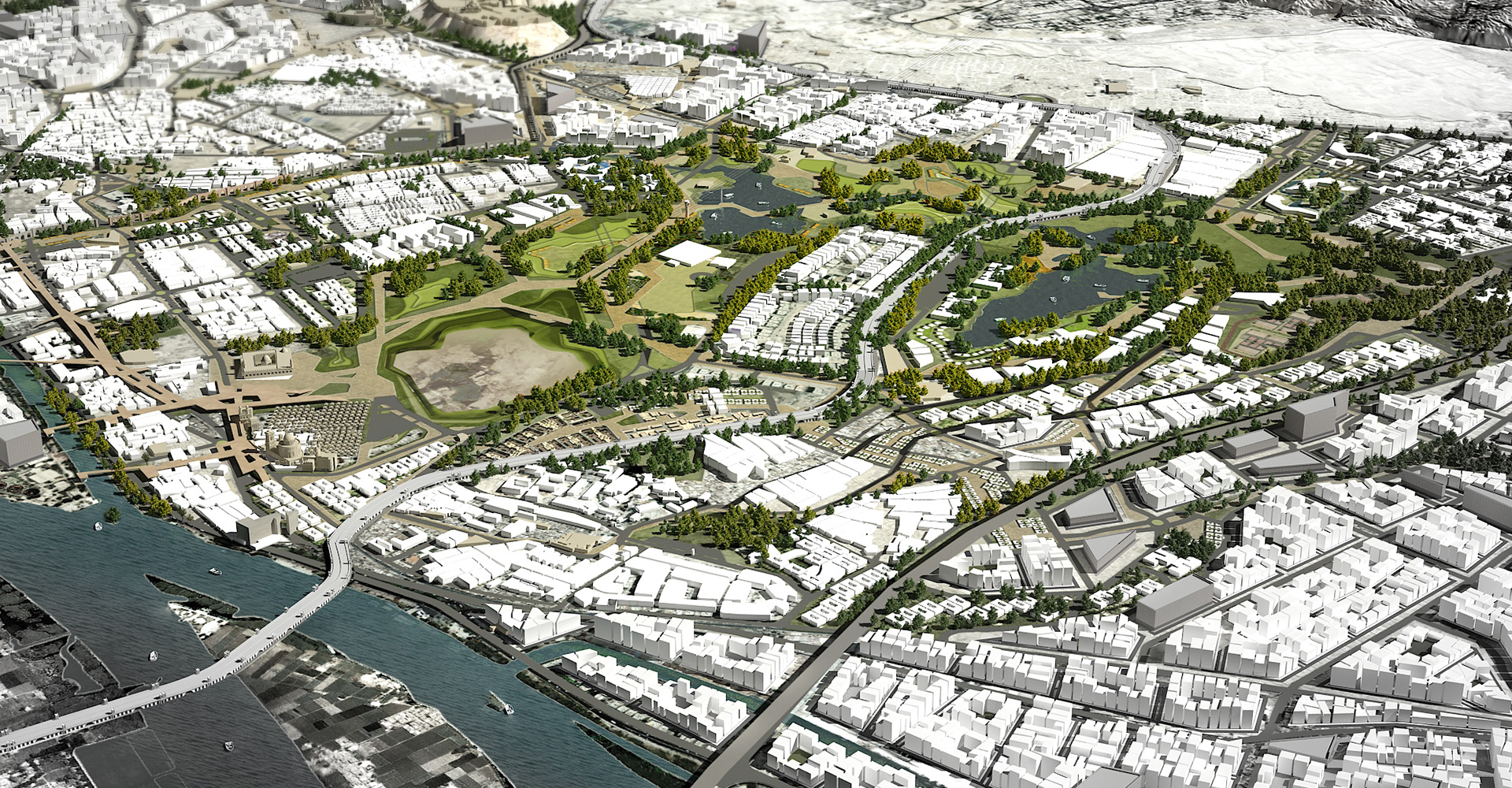
AL FUSTAT OPEN MUSEUM 02
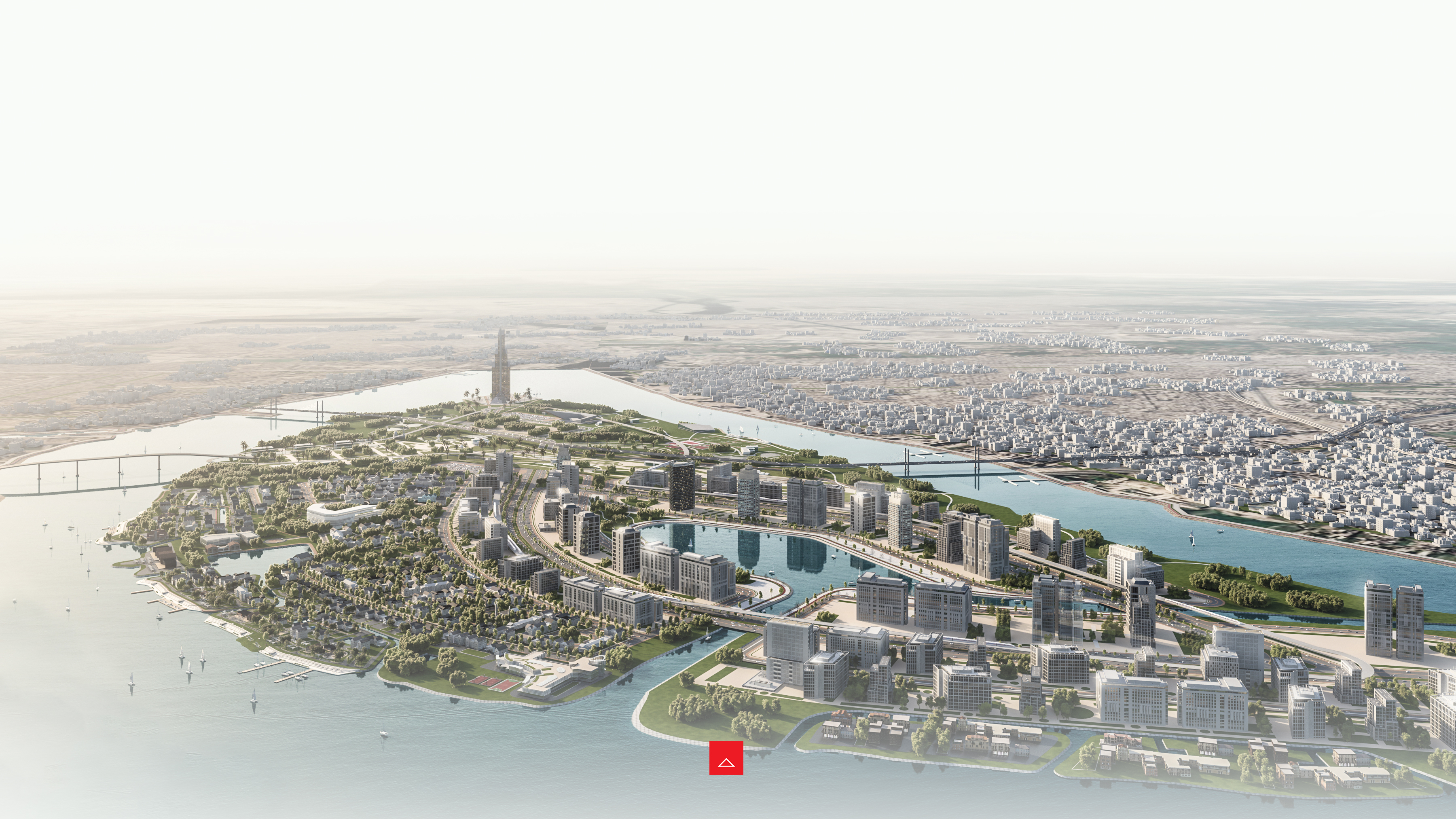
UPGRADING OF NILE ISLANDS
03
Info & Data
Owner: Ministry of Housing & Urban Communities, Egypt.
Planning Consultant: Cube Consultants
Year: 2010
Objectives of the Egyptian vision
“In 2050, Egypt would become an advanced country (economically and socially) and acts effectively on the regional and international level"
-Raise the quality of life standards to become one of the best 30 countries around the world instead of the current ranking (84) of the 100 countries.
-Raise human development standards to become one of the best 30 countries in the world instead of the current ranking (111) of the 180 countries.
-Raise the quality of Egyptian production (Made in Egypt).
- Reach higher rates in sustainable economic development (not less than 7.5% per year).
- Achieve social equity (between different segments of society).
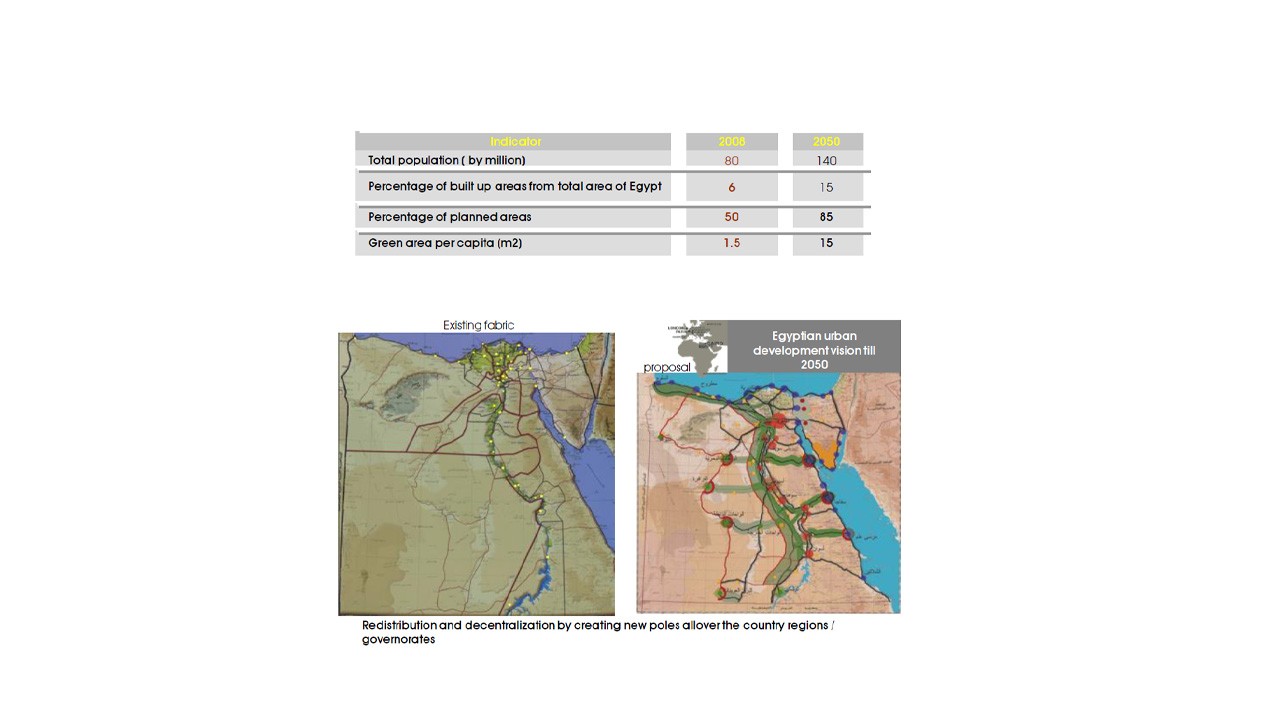
- Restructure the demographic distribution of Egypt, to enhance the benefit of Egypt's geographical location and its natural potentials.
- Build an integrated society in which all can enjoy the rights of citizenship.
- Maximize the effectiveness of Egypt’s regional role on the Arab, Islamic, and African levels.
Main sectors of Egypt’s vision 2050
Population and Urbanization: include land use, the spatial distribution of population, housing, infrastructure, living services.
Employment and Economy: include job opportunities, economic activities, Geographical distribution, development and employment of resources, interaction with land, and resources.
Environment: the quality of life, maintenance of non-renewable natural resources and rationalize their use.
Human and Life: (human development and quality of life) education, health, culture, tradition, essential demands and social security.
In 2050, Total population of Egypt will reach about 140 - 145 million inhabitant
Main sectors of Egypt’s vision 2050
Achieve a balanced urban development (spatial, volume) by focusing on the development of small and medium-sized cities.
• Re-definition and formulation of the Egyptian countryside.
Increase the inhabited area by 6% to 15% of the total area during the next four decades.
Support the decentralization of management, planning, and implementation.
Vision orientation
• Limit the centralization of Cairo as unique pole through creating others poles
Why a Vision for Cairo
Surplus of the population in Greater Cairo Region
2006: 16 million inhabitant
2020: 20 million inhabitant
2050: 30 million inhabitant
The region accommodates: 22% of the total population of Egypt & 43% of the total urban population of Egypt
Main problems of the Region
High residential density in main existing agglomeration. Rising traffic congestion. Limit/mediocre use of culture and natural resources. Mediocre living conditions in some areas. Limited green spaces (0.3 m2 /person within the ring road and 1.5 m2/person in the region as total).
More than 75% of inhabitant are living within 30km from the mass center
Execute Technical cooperation with national and international agencies/firms to elaborate studies, plans such as JICA and World bank, UNDP and UN-Habitat
Cairo needs a new strategic plan based on sustainable principles. The need for massive and rapid shift in thinking and implementation to secure better life for current and future generations.
STRENGTHS AND CHALLENGES
Inhabitant
One of the largest cities in the world in the labor force, large markets and purchasing power One of the highest population densities of Metropolis in the world
Economy
High rate of Egyptian GDP and a strong contribution in the national economy High rate of unemployment (7%)
Heritage & tourism structure :
Pharaonic, Coptic, Islamic period Nile river, oasis, natural resources
Urban fabric
More than 75% of the population living within 30 km from the city center More than 40% of urban areas are illegal settlement
The vision and its objectives
The vision
Sustainable development vision for Cairo 2050 and beyond. Includes social, cultural, and economic fields integrated with the urban field. With good Governance, we can achieve the best results for current and future generations.
Global
African gate and one of the best Middle Eastern capitals. Regional and international pole for political, administrative, cultural, tourism, and economic sectors. Capital of world heritage with all its historical heritage. Act effectively in the global culture networks and an active partner in the global knowledge exchange. Includes tourism and commercial activities and high-level business. Includes social, cultural and tourism institutions to protect, attract different talents. A global city with high technology.
Green
Good living conditions for its citizens (to be among the 30 best cities in the world). One of the pioneer cities in the context of the environmental level. Restoration of the urban and architectural heritage of the city and elimination of slums. Reach the international standard for green areas/per capita. Containing routes for pedestrians, open and green areas, and public squares.
Connected
Socially connected
Social equity and social cohesion. Commitment to the participatory and cooperation cultures between the government, private sector, and civil society. The city is a part of the national and international community.
Road and Transportation networks connection
Access to roads network linking Cairo suburbs to regional roads. Good transportation network at an international level. It has a pedestrian and cycling network linked with the transportation network.
Technology Connected
The network has a link to government services through internet “high-speed internet – road band connection”
Basic Principles to achieve the vision
G.C.R should be competitive at the national, international level. Investment & Exploitation of GCR potentials as the capital of Egypt (social, historical, cultural, tourism). Preservation and rehabilitation of historical and heritage zones. Precise urgent needs for social, cultural, economic, and urban development to improve quality of life for CAIRO citizens. Provision and increase job opportunities, investment of human capacity. Upgrade poor, deteriorate, and informal existing areas, provide new adequate residential areas compatible with government plans to limit informal zones in order to create a good and healthy society. Relocation of land uses that cause pollution far from the city center.
Improvement and creation of roads, tunnels and transportation networks within the GCR at regional, national and international level Upgrade infrastructure network. Create a green grid from green areas and parks to upgrade living conditions.
Enhance the coherence and integration between the existing urban areas and new urban communities. Identify and create a network of investment projects (culture, administration, tourism, religious, social….) in order to attract investors and implement projects of 2050 vision with their participation and integration.
Implement existing and approved mega projects as priority projects due to their regional and national importance such as relocation of ministries and public institutions outside the core of the city. Encourage the participation of civils and citizens as an important issue to the sustainable development of the Cairo 2050 projects.
The strategic sectors and Themes to realize the vision
Main development sectors for G.C.R
Sector (1) Better Governance
Precise the limits of the administration boundary of the capital within the region. Special law and institutional framework for the capital different than local administration law. Encourage the cooperation of the private sector in development projects/ programmers. Identify clear roles for the province's urban communities and give each of them a branding that prevents competition among them.
Many responsibilities and roles for many different central and local authorities in controlling and implementing development projects in the region
Upgrade living conditions at international standard
Better Governance Housing and informal Improve the environment and Increase green areas Roads and Transportation Water and Sewage sector
Housing and informal: decentralization and redistribution of population in Cairo and Giza
Basic principles of housing in the capital
Adequate urban house with high living conditions. Upgrade informal areas by converting them to planned areas with complete infrastructure and services. Take into consideration, as priorities, the social issue, and protection of citizen's life when upgrading informal zones.
Maadi- Zamalek- Heliopolis-Garden city- Dokki-Mohandessin-Agouza and others planned zones
Set building regulations for zones: Maadi, Heliopolis, Garden City, El Dokki, Mohandessin, Agouza, and other planned zones
In order to preserve the special character of these zones and control demolition and building through:
Precise building heights limit, taking into consideration the existing situation. Prevent miss-uses which causes traffic congestion. Built multi-store garage. Precise axes for services and commercial uses.
Dealing with these areas through:
Open accesses and roads Provide essential services, facilities in pockets and vacant land SMEs and job creation for the youth
Improve the environment and increase green areas Raise the rate of green areas/capital to reach 15 m2/person ..thus total green areas in the region will be 50 thousand (acres) feddan
Relocate polluting industries (cement, steel,…) and pig farms outside the region.
Public transportation: current situation
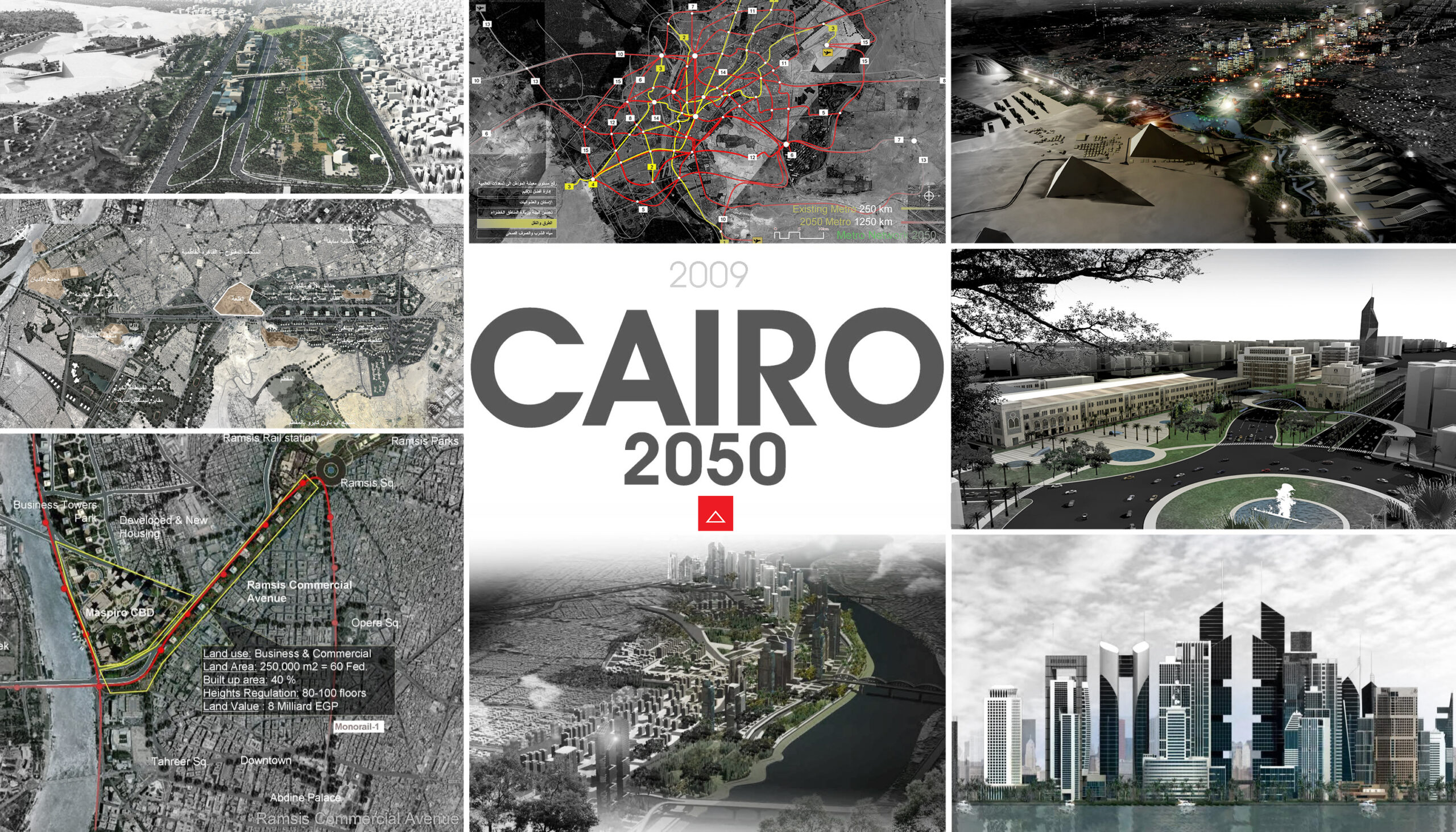
Proposed for G.C.R. in 2050 15 lines: for 600 km 60 km/million persons
Roads Network
Create & upgrade road network & Speed Corridors 14 highway linking the inside and outside of the ring road along the 1000 Km
Increasing subway lines 14 highway to better link inside and outside region
Create and upgrade road network and speed corridors 14 highway corridors for better linking inside and outside the region
Culture and media sector
A set of specialized museums, cultural centers on the international level. Establish a global movie studio. International library in Cairo.
Industry sector
Create two medical towns at international standards especially for tertiary care (open heart surgery, liver, and kidney. Air ambulance and medical evacuation (medical intervention in case of disaster emergency) to Egypt and the countries of the region.
Focus on natural medicinal products.
Education sector
Establish Cairo International city for Education and Research. Create three technology poles along the main development corridor.
Create eight international joint universities.
Create ten center units for training and control researches in science and technology.
Tourism sector
Current no. of hotel rooms = 27 thousand room
In 2020 no. of hotel rooms = 30 thousand room
2050 no. of hotel rooms = 50 thousand room
Use of Nile river as a recreational axe. Transformation of Islamic, Coptic, Khedive Cairo zones to open museum and touristic centers. Expansion of recreational and therapeutic tourism, conferences, and exhibitions.
Finance and trade sector
Create a center for financial services well served with transportation and telecommunication network. Support the financial sector to finance small projects. Activate the economic cores for local industries. National program to exceed the rate of dealing with persons with the sector.
Telecommunication and technology sector
Establish a number of technology universities. Increase the of services and technology products. Develop an information infrastructure. Enlarge the use of technology tools. Continue to liberate the sector to contribute with international agreements on commercial bodies in order to encourage investment or s participation.
Telecommunication and technology sector
Establish a number of technology universities. Increase the of services and technology products. Develop an information infrastructure. Enlarge the use of technology tools. Continue to liberate the sector to contribute with international agreements on commercial bodies in order to encourage investment or s participation.
Proposed Mega Projects within the region to achieve Cairo vision 2050
International, Green, Connected City
historical places at Cairo's core
proposed decentralization locations
Mega Projects
proposed mega projects to achieve the vision Cairo's districts have been divided into 11 development sectors ( Mega development projects )
Visual Presentation