

THE ARCHITECTURE OF ADMIN SPACES
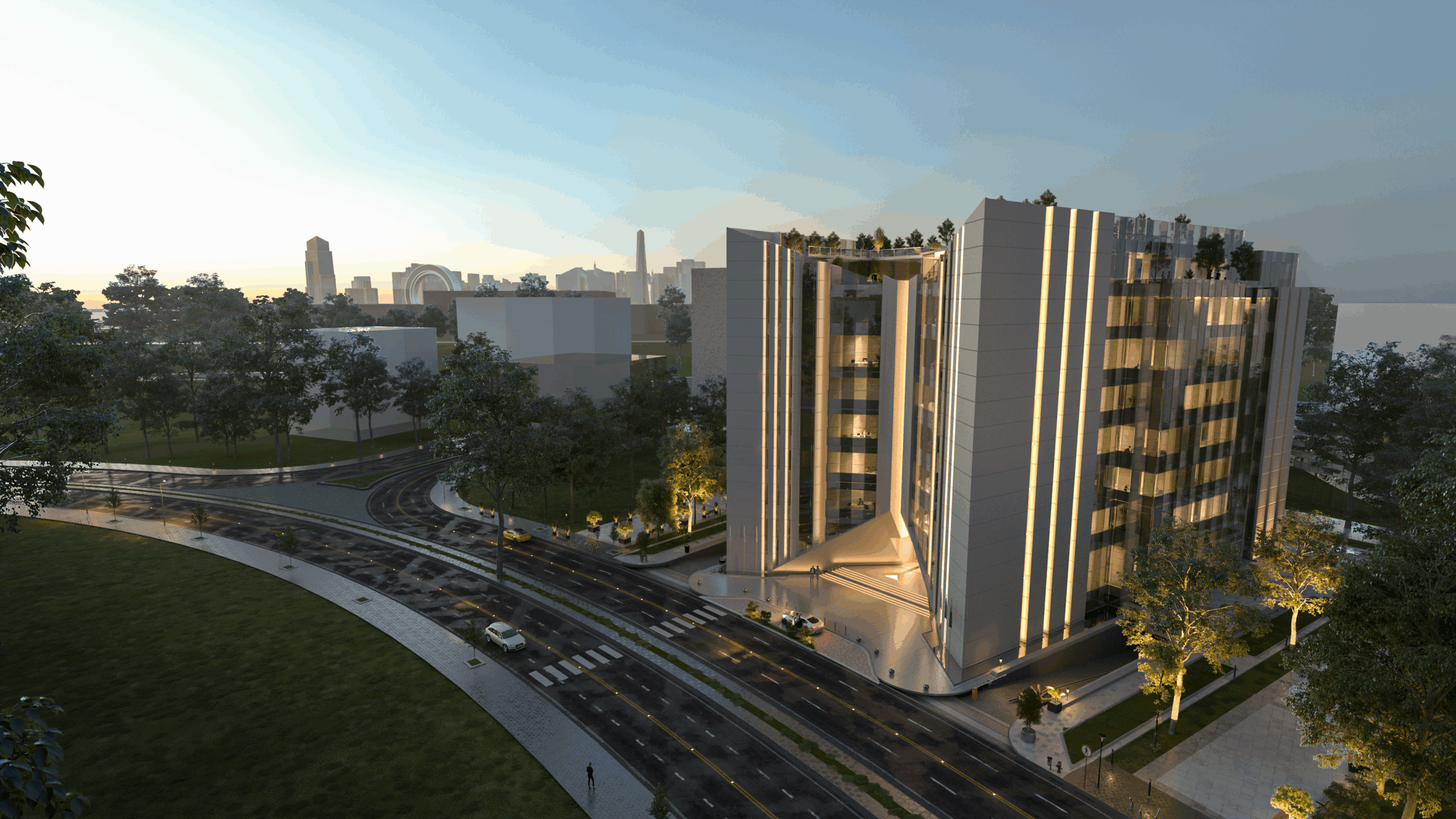
Administrative buildings are more than offices; they are the engines of nations, institutions, and organizations, shaping how decisions are made, how citizens are served, and how daily operations flow.
From ancient record halls to today’s smart, climate-responsive complexes, the architecture of admin spaces has evolved into a discipline where efficiency meets identity, and functionality meets human experience.
In this article, we explore, through seven key questions, how administrative buildings developed over centuries, the planning principles that govern them, the environmental and technological drivers reshaping them, and the challenges architects navigate to balance performance, comfort, sustainability, and brand expression. It is a comprehensive look at what it truly takes to design the spaces that keep societies moving.

1. What is the historical development of administrative buildings, and when did they start taking their modern form?
Objective: To understand the historical background and the key milestones that shaped today’s concept of administrative buildings.
Administrative buildings began as the power hubs of ancient civilizations, buzzing temple-palaces in Mesopotamia, record-filled Egyptian complexes, and the versatile Roman basilicas where law, trade, and governance mingled under one roof.
Through the Middle Ages, these spaces evolved into town halls and royal chancelleries that anchored civic identity and growing bureaucracies. But the real transformation came with the rise of modern states: from the 17th to 19th centuries, governments demanded buildings that could organize armies of clerks, safeguard archives, and project authority.
By the early 20th century, steel frames, elevators, and the clean lines of modernism reshaped these once ceremonial spaces into efficient, purpose-built administrative machines, essentially the blueprint for the government and corporate office buildings we recognize today.

2. What are the essential internal requirements for any administrative building in terms of spatial layout and functional distribution?
Objective: To clarify planning fundamentals such as the distribution of offices, meeting rooms, circulation, and support spaces.
Essential internal requirements for an administrative building hinge on creating a clear, efficient spatial hierarchy that supports daily operations. Offices are typically arranged according to privacy and workflow needs, public-facing units near entrances, general workspaces in central areas, and executive offices in quieter zones.
Meeting rooms of various sizes are distributed throughout to support collaboration, ideally placed near departmental clusters for easy access. Circulation must be intuitive, with primary corridors and vertical movement (stairs, elevators) forming a legible spine that minimizes travel time and prevents congestion.
Support spaces, such as reception areas, storage rooms, printing zones, IT/server rooms, restrooms, and staff break areas, are strategically placed to remain accessible but unobtrusive. Overall, the layout balances openness and privacy, ensures smooth movement, and creates a functional ecosystem where each space reinforces administrative efficiency.
Behind this smooth experience lies a network of essential support and MEP spaces that strengthen functionality: dedicated mechanical rooms for HVAC equipment, electrical rooms for panels and backup systems, data/telecom rooms connected to trunk lines, fire pump and sprinkler control rooms, janitor/cleaning closets with service sinks, and waste-handling rooms for safe collection and disposal.
Together, these spatial and MEP components create an organized, efficient environment where administrative processes can operate smoothly and reliably.

3. What are the main requirements for creating a comfortable and productive work environment inside administrative buildings?
Objective: To explore workplace factors like lighting, ventilation, acoustics, privacy, and shared spaces and how they impact employee productivity.
A comfortable and productive administrative workspace depends on a blend of environmental quality and thoughtful workplace design. Good lighting, especially natural light supplemented with well-balanced artificial illumination, boosts focus and reduces fatigue.
Effective ventilation and thermal control keep the air fresh and temperatures stable, directly influencing alertness and comfort. Strong acoustic design helps limit noise from open offices, corridors, and equipment, preserving concentration. Privacy is supported through layout choices, such as buffered zones, meeting rooms, and semi-enclosed workstations that allow employees to focus without feeling isolated.
Finally, well-designed shared spaces, break rooms, lounges, collaboration areas, and quiet zones encourage interaction, reduce stress, and support varied work styles. Together, these factors create an environment where staff can think clearly, communicate easily, and perform at their best.

4. How has modern technology influenced the design and operation of administrative buildings? And what are the key smart systems used today?
Objective: To examine the role of technology in smart building management, security, energy efficiency, and integration with modern work systems.
Modern technology has turned administrative buildings into lively, intuitive spaces that practically run themselves. Smart Building Management Systems use webs of IoT sensors to sense when people arrive, adjust lighting, fine-tune the AC, and cut energy use without drawing attention.
Even the windows have gotten smarter: AI-driven automated shading systems track sunlight, temperature, and glare throughout the day, adjusting blinds in real time to keep spaces bright but comfortable. Security is smoother too, with biometric doors and AI-assisted cameras quietly safeguarding the building.
Add in fast connectivity, cloud platforms, smart elevators, and energy dashboards, and administrative buildings start to feel less like static workplaces and more like helpful partners, always comfortable, secure, and one step ahead.

5. What standards and building codes must architects follow when designing administrative buildings, especially concerning safety and sustainability?
Objective: To highlight the importance of compliance with planning regulations, emergency requirements, sustainability standards, and accessibility.
Architects designing administrative buildings must navigate a framework of safety, sustainability, and accessibility standards that shape everything from floor layouts to material choices. Building codes typically require strict compliance with life-safety regulations, including fire-resistant materials, protected escape routes, emergency lighting, fire alarms, and sprinkler systems (often guided by standards such as the International Building Code (IBC) and NFPA rules).
Planning regulations dictate site use, building heights, setbacks, and parking, ensuring the project fits safely and legally within its urban context. To ensure accessibility, architects follow guidelines such as the ADA Standards for Accessible Design, covering ramps, elevators, door widths, tactile signage, and inclusive restroom layouts.
Sustainability is equally crucial, with many administrative buildings designed to meet LEED, BREEAM, or similar green-building standards that promote energy efficiency, healthy indoor environments, and responsible material use. Together, these codes and certifications ensure that administrative buildings are safe, environmentally responsible, and accessible to all users.

6. What are the main challenges architects face when designing an administrative building compared to other building types?
Objective: To identify design challenges such as future flexibility, user density, cost management, and space efficiency.
Designing an administrative building brings a set of challenges that go beyond those of most other building types, pushing architects to juggle efficiency, adaptability, and performance. One of the biggest hurdles is future flexibility; the building must be planned to handle shifting staff sizes, new technologies, and evolving workplace models without major disruptions.
High user density demands layouts that keep circulation smooth and prevent bottlenecks, while still offering enough quiet and collaborative areas. Cost management adds pressure, as clients expect durable finishes and smart systems without overspending. Maximizing space efficiency is essential too, fitting offices, meeting rooms, support spaces, and MEP zones into a compact yet comfortable footprint. On top of that, architects face the challenge of administrative building massing and modeling: these projects often require large, block-like volumes that must remain visually appealing, contextually appropriate, and environmentally responsive.
Achieving a balanced massing form, one that brings in daylight, supports energy efficiency, and respects site constraints, can be far more demanding than in smaller or more sculptural building types. Combined, these factors make administrative buildings some of the most complex and strategically driven projects architects design.

7. How does the design of the building’s façade contribute to the company’s identity and branding? And what elements should be considered to balance aesthetics and functionality?
Objective: To explain how the façade acts as a visual representation of the brand while maintaining functional performance.
The façade of an administrative building is a powerful tool for shaping how a company, or institution, is perceived, because it instantly communicates identity, purpose, and values. In corporate headquarters, sleek glass skins or dynamic geometric patterns project innovation, ambition, and modernity, reinforcing a forward-thinking brand. In government or public administrative buildings, more solid, monumental façades with stone or concrete convey stability, authority, and trust.
For educational or institutional administration, warm materials and open, transparent façades suggest accessibility, community, and collaboration. At the same time, this expressive power must work in hand with functionality. Architects carefully consider solar control, insulation, glare reduction, daylighting, acoustic performance, and maintenance to ensure the façade performs efficiently year-round.
Elements like smart glazing, shading fins, double-skin systems, and optimal window-to-wall ratios help merge beauty with performance. Ultimately, the façade becomes the building’s “character”, a visual story that strengthens brand identity while meeting the technical demands of comfort, sustainability, and long-term durability.
Administrative buildings may appear simple at first glance, but behind every corridor, façade line, meeting room, and service core lies a complex interplay of history, regulation, technology, human needs, and organizational strategy. As cities grow smarter and institutions evolve, these spaces must become more adaptable, more efficient, and more humane.
Designing them is an act of shaping how people work, collaborate, and lead. For architects, the true challenge and opportunity lie in creating administrative environments that are resilient, sustainable, future-proof, and deeply aligned with the identity of the institutions they serve.
At CUBE, we believe admin spaces are ecosystems, and when designed with intent, they elevate well-being, productivity, and the very quality of governance.

Eng. Ahmed Amin
Team Leader, Design Architect