

Lujain Resort, Salalah: Designing a Water-Led Urban Ecosystem in Oman
A technical deep-dive into the 3.6 million m² waterfront masterplan
Introduction: Beyond a Resort—A Fluid Urban Ecosystem
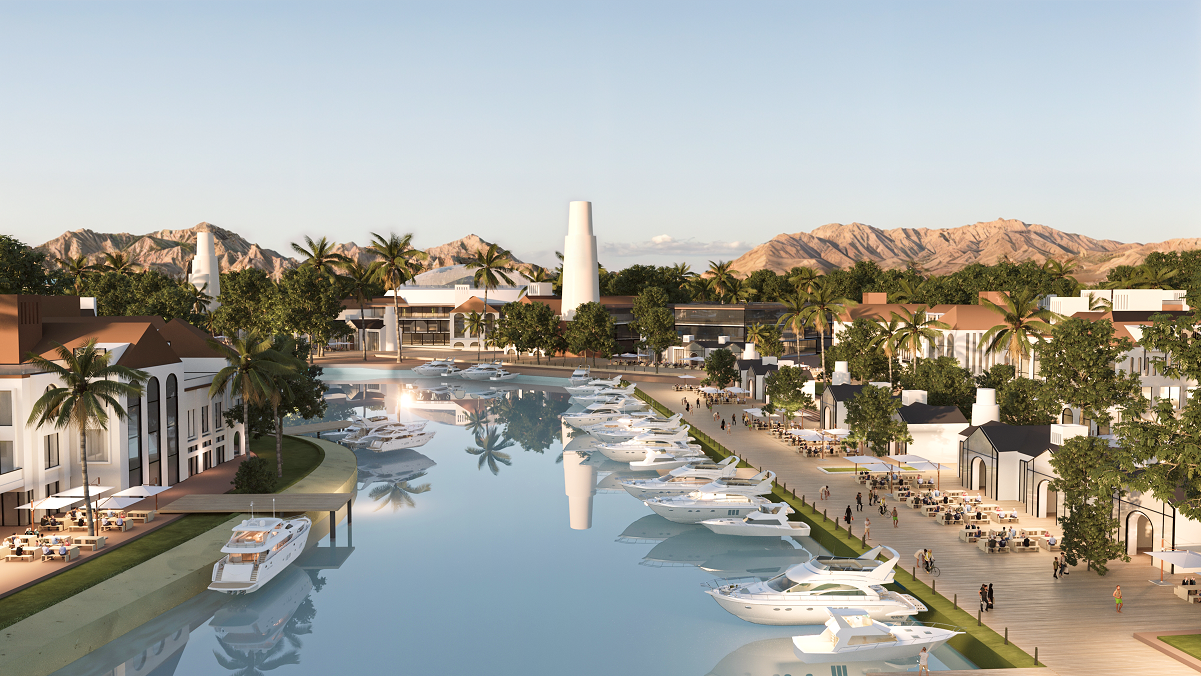
Lujain Resort in Salalah is not simply a luxury coastal destination; it is a water-driven, climate-responsive urban ecosystem designed across 3,632,109 m². The masterplan integrates 20+ villa typologies, 3,000+ apartments, 1,000 hotel keys, a 2 km marina promenade, and 1,000,000 m² of lagoon networks—creating a living environment where hydrology, mobility, and form-generation operate as one system.
1. Site Intelligence: Designing for Khareef Climate
Salalah’s microclimate—cool monsoon winds, elevated humidity cycles, and seasonal greenery—directly shaped the project’s environmental strategy.
Key Technical Parameters
- Prevailing winds: South–Southwest → informs natural ventilation corridors
- Solar exposure: Optimized through sloped roofs & strategic massing
- Environmental loads: Managed through passive cooling + water networks
- Topography: Gently sloped, enabling gravity-fed lagoon extension
Insight:
The project leverages Salalah’s climatic advantage by extending the ocean inland, creating a temperature-buffering lagoon system that reduces thermal storage and improves microclimate by 3–5°C in peak months.
2. Water as Form Generator: Lagoon Morphology & Urban Hydrology
The central design premise:
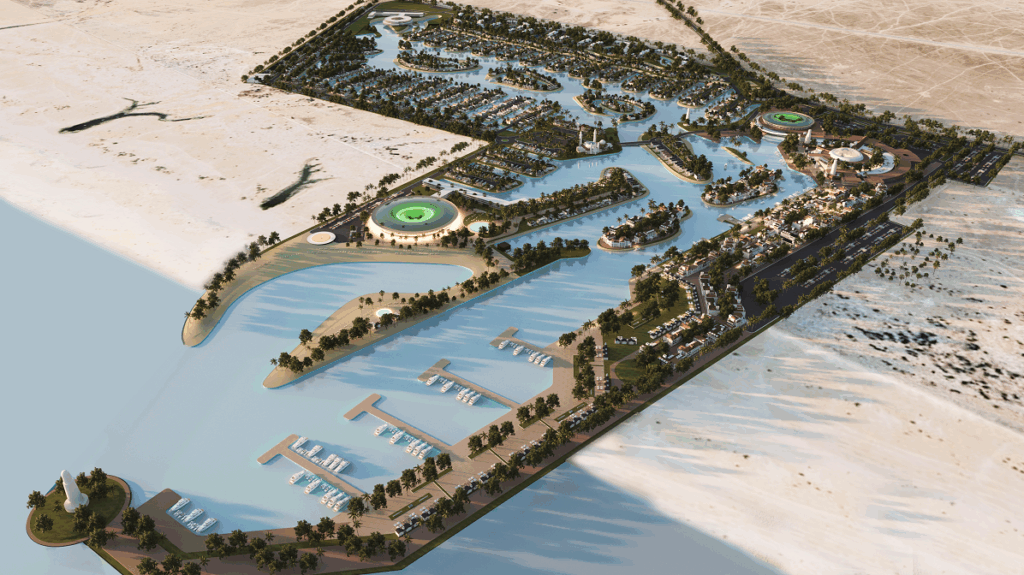
“Extend the ocean into the land—make water the spine of the masterplan.”
Hydrological System Highlights
- 1,000,000 m² lagoon system engineered as a closed-loop water body
- Distributed filtration nodes to maintain self-cleaning cycles
- Controlled water levels through smart gates and retention zones
- Overflow channels designed for monsoon peaks
Urban Impact
- 77% of all villas enjoy direct or semi-direct water frontage
- Hotels positioned as hydro-anchors overlooking the infinity edge
- Cooling breezes channelled through lagoon corridors
- Increased land value through expanded waterfront edge geometry
This hydrological-first approach is what elevates Lujain from a “resort” into a water-urbanism prototype.
3. Lujain’s functions: Zoning & architectural program.
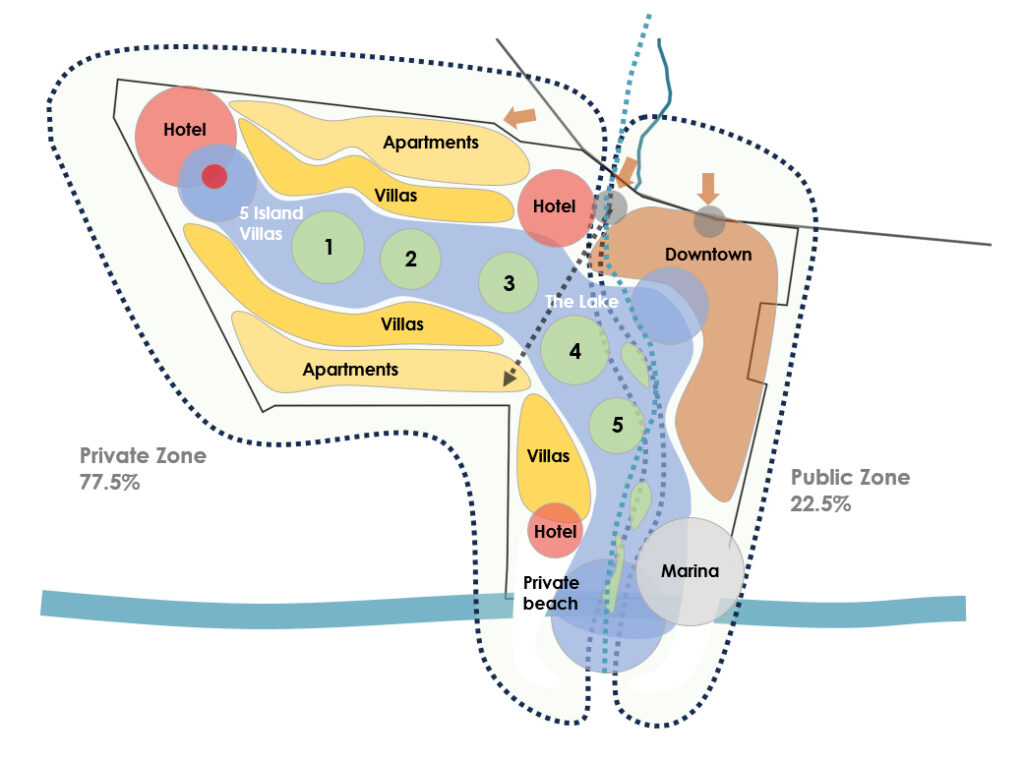
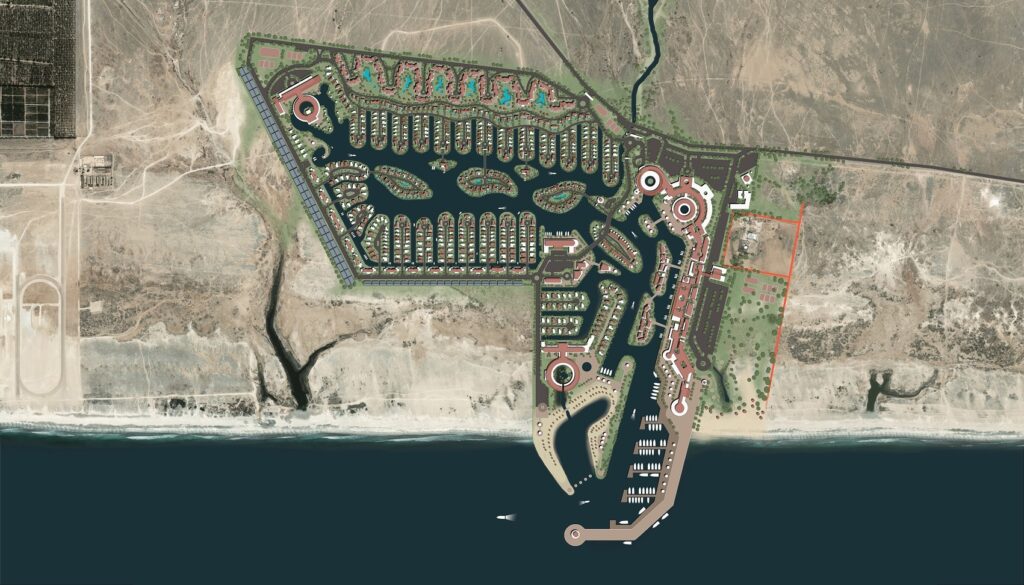
The resort provides a comprehensive program revolved around the infused water lagoon, divided into two zones:
1. Public Zone (22.5% of Lujain)
- Downtown mixed-use blocks
- City Center mall & exhibitions
- 2 km Marina Walk
- Downtown hotel
Technical Note:
The urban blocks follow 40% footprint + 1 FAR, allowing mid-density, walkable commercial districts without overwhelming the waterfront.
2. Private Islands Zone (77.5% of Lujain)
- Residential Apartments
- Mosque & Services center
- Falling Water Hotel
- Lujain Islands
- Central Islands
- Palace Islands (personal islands)
These are shaped following 360° shoreline maximization geometry, using fractal-like edges to increase sellable premium plots.
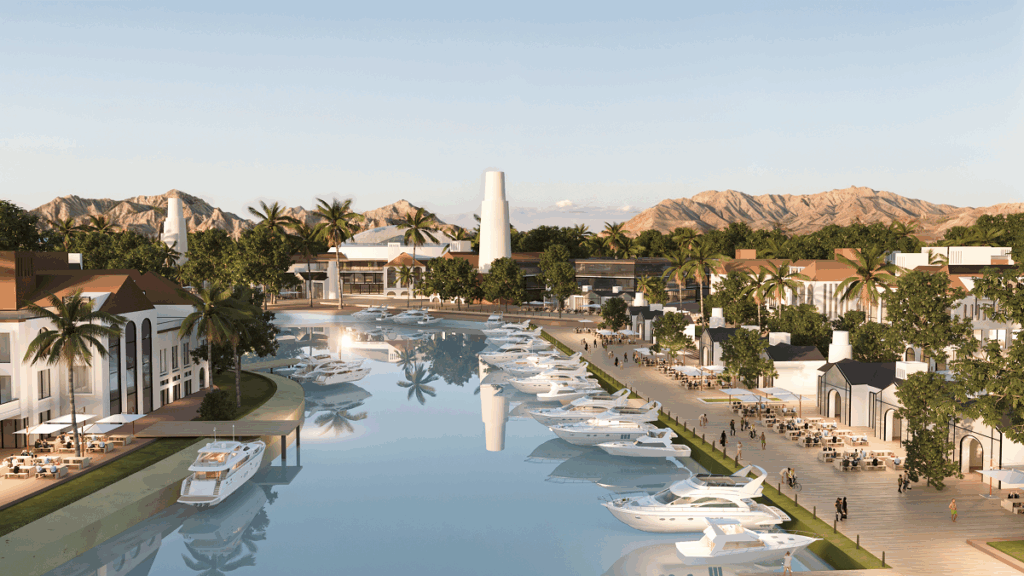
4. Architectural Language: Modern Omani Identity
Across villas, apartments, hotels, and mixed-use blocks, Lujain shares the vocabulary rooted in Omani vernacular sustainability.
Key Elements
- Arches: Structural and shading function
- Sloped roofs: Rain management + reduced heat gain
- Wind towers: Passive cooling intake system
- Solar panels: Integrated renewable strategy
Why It Works
Instead of importing a foreign design identity, the project uses regional morphology while maintaining contemporary proportions and materials.
This fusion supports both cultural resonance and environmental performance.
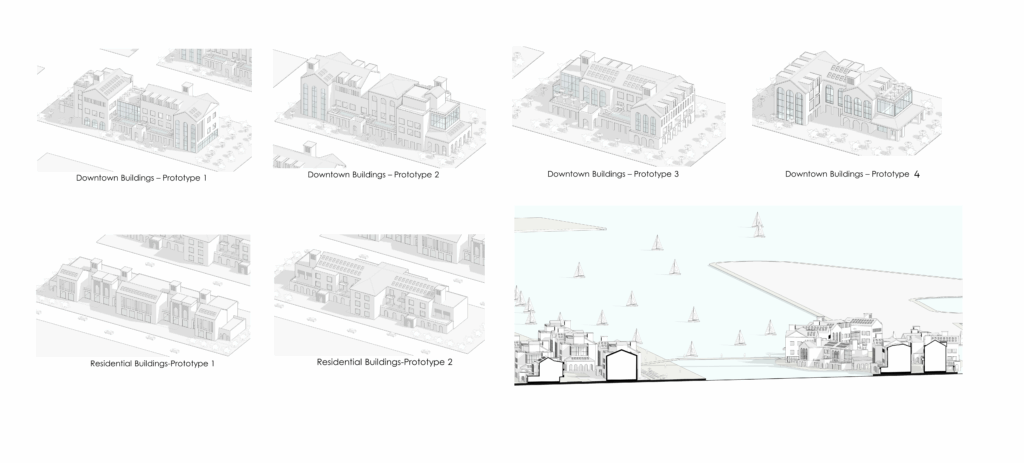
5. Residential Architecture: Typology Engineering at Scale
The project includes:
Villas
- 10+ standalone villa types
- Twin villas
- Townhouses
- Private island palaces
- Plot sizes: 600–4,000 m²
- BUA: 120–600 m²
Apartments
- 1, 2, 3 bedrooms + duplexes
- 70–200 m² units
- 3-floor max height for waterfront blocks
Highlight:
Unit distribution follows a 75% sellable efficiency on islands, taking into account setbacks, canal edges, and private beach allocations.
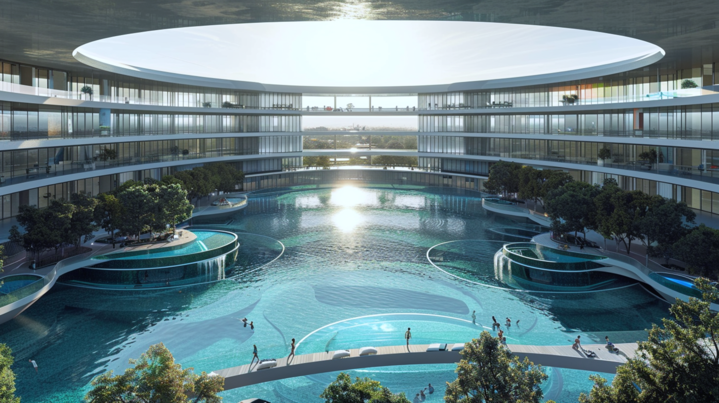
6. Hotels as anchoring design elements (1,130 Keys)
The hotels are arranged as landmarks but also as environmental regulators.
Falling Water Hotel
A sculptural hotel embedded within the lagoon system, functioning as:
- A heat-sink moderating canal temperatures
- A microclimate generator
- An iconic silhouette for the resort’s identity
Beach Hotel
Placed at the site’s natural ocean interface to:
- Create a gateway vista
- Capture prevailing breezes
- Anchor the beachfront experience
7. Circulation: Walkable Downtown
Key Circulation Principles
- Car movement restricted to arterial loops
- Internal island circulation via e-buggies, carts, and shaded walkways
- 30 m marina promenade designed for retail, F&B, and public life
- Distributed parking hubs (2,500-car downtown lot)
The circulation system supports a slow-city philosophy, prioritizing human comfort over vehicle throughput.
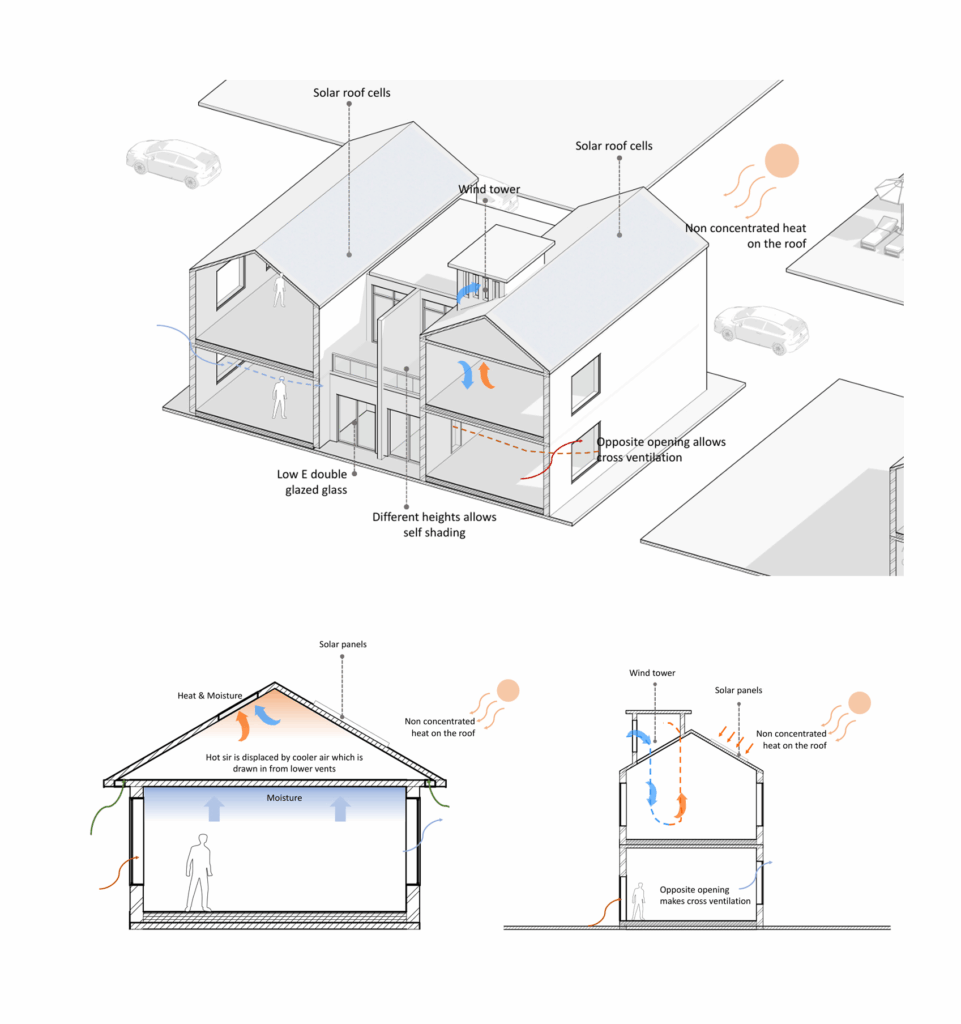
8. Sustainability Framework
Beyond aesthetics, sustainability is embedded through:
Passive Systems
- Wind towers
- North–South villa orientation
- Shaded arcades
- Water-based cooling corridors
Active Systems
- Solar farms (3.1% of land area)
- Hybrid sewage treatment
- Smart lighting & grid management
Urban Ecology
- 27.5% dedicated to lakes and water features
- 30–70% landscaped open space, depending on zone
- Biodiversity corridors linking lagoons to green buffers
This creates a self-sustaining resort-urban district.
Conclusion: A New Model for Gulf Coastal Urbanism
Lujain Resort is a technical showcase of how water, climate, culture, and luxury can merge into a coherent architectural ecosystem. With its integrated hydrology, Omani-rooted architectural language, and sustainable eco-tourism, the project stands as a regional benchmark for waterfront cities in the GCC.